

Finding a good tenant often feels stressful for every landlord. Demand stays high, and people move frequently, sometimes with very little notice, which happens more than many landlords expect. Add the fact that many jobs are informal, and checking reliability becomes tricky. That mix puts real pressure on landlords. Rushing the choice usually makes things worse. Late rent or legal problems often show up later when screening is skipped, and that’s a headache no one wants. This is why learning how to screen tenants properly matters, especially before the keys change hands.
Effective tenant screening Kampala landlords rely on isn’t a single quick check. It’s usually a mix of identity checks, income review, and local context working together, not just paperwork sitting in a folder. When done well, the process helps protect rental income and saves time and money. When handled poorly, it can turn into weeks, sometimes months, of stress and constant follow-ups.
This guide starts with the most practical parts of reliable tenant selection in Kampala and breaks them into clear steps. You don’t need fancy tools to follow along. You’ll see how a background check tenant process can fit Ugandan realities, along with legal limits and common mistakes to avoid. Many investors across Uganda use similar methods shared by professionals at Rizton Properties, known for hands-on property management and compliance.
Understand the Kampala Rental Market Before You Screen
One thing that often surprises landlords is how different Kampala’s rental market feels once you’re actually dealing with it. Before screening anyone, it helps to know that the city doesn’t rely on fully digital systems like many other places. Many tenants earn money informally, and solid credit records are usually hard to track down. Because of this, personal references and local, in‑person checks tend to matter more than online scores. From my experience, this becomes clear pretty quickly once the search starts.
Kampala is also home to a young and fast‑growing urban population, which keeps rental demand high. Renting is much more common than owning, so tenants move often. When several landlords are after the same renters, choices can happen very quickly, sometimes too quickly, and that’s usually when issues begin.
So what really guides screening decisions here? The signs are fairly simple, but easy to overlook.
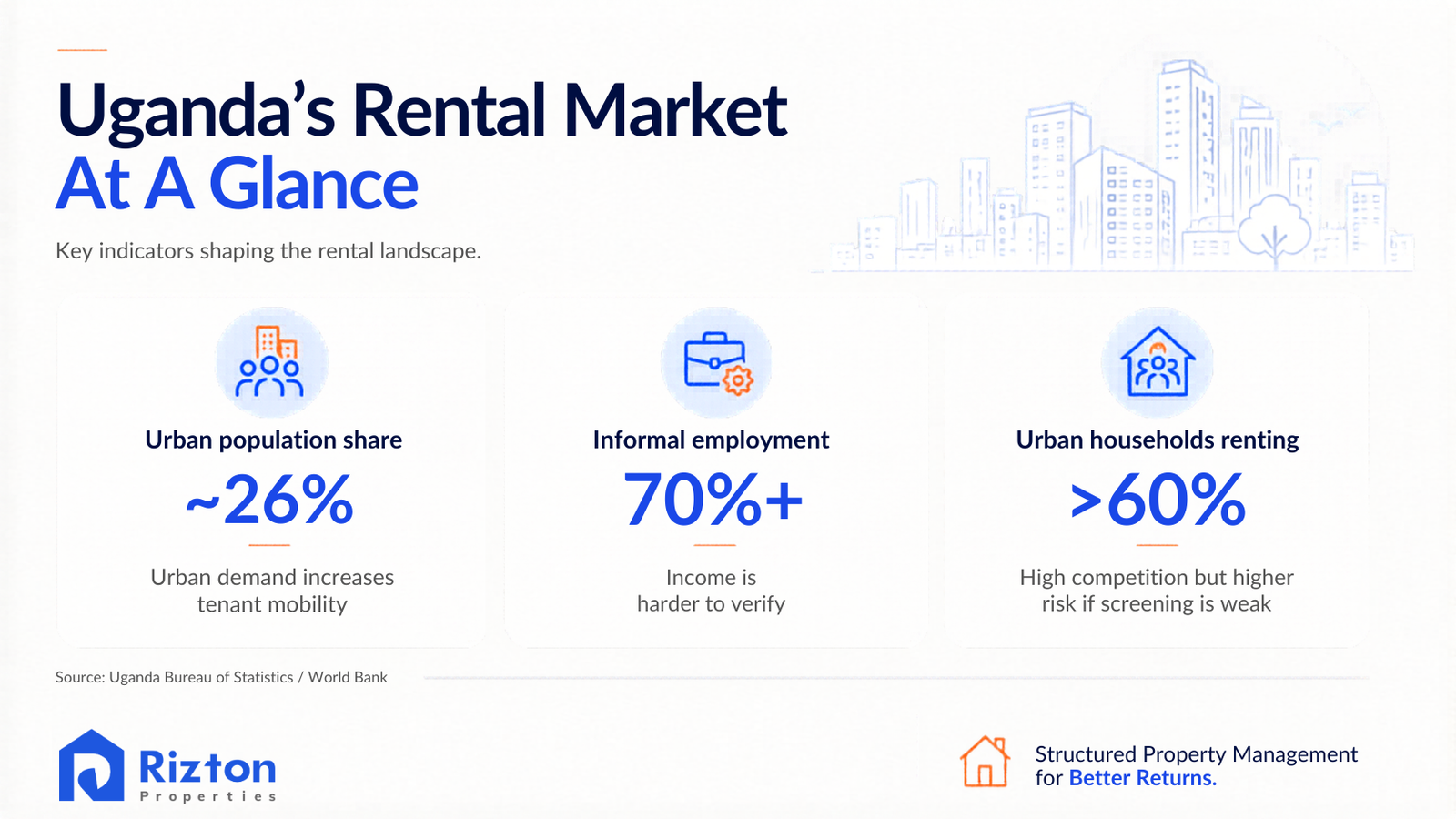
All of this means a tenant background check process in Kampala can’t rely on credit scores alone. Global landlord surveys shared by RentRedi, helpful for general patterns, even if they miss local details, show that about 40% of landlords focus on background and reference checks (RentRedi). That lines up well with what many Ugandan property owners notice day in day out.
Step 1: Verify Identity the Right Way
Reliable tenant selection often starts with identity checks. It may seem simple, but this is where small details can be missed, and that’s usually how problems start. When landlords rush this step, risk tends to rise more than they expect.
A valid National ID should be the first thing you review. It helps to slow down at this point: look closely at the name, take time with the photo, and check the NIN, even if it feels repetitive. The spelling should match every other document exactly. Small differences can cause issues later, especially if follow-ups are needed.
So what if details don’t match? A helpful option is to check the ID against other records the tenant shares. This might include an employment letter, a bank statement, or, quite often, a previous lease, which is usually the most useful. Names and dates should line up across all documents. If something seems off, ask about it early instead of moving forward and hoping it sorts itself out.
Confirming where someone currently lives adds another layer of safety. In Kampala, a letter from the Local Council (LC I or LC II) is still widely accepted and easy to get. It often gives a clearer picture of local connections.
Lastly, treat documents carefully. Under the Data Protection and Privacy Act, 2019, landlords are expected to store personal data safely and keep ID copies only for as long as they are truly needed.
Step 2: Check Income and Ability to Pay Rent
A tenant can be friendly and easy to talk to, but that doesn’t always match what the rent requires. That’s why income checks usually matter more than people expect. It isn’t personal; it’s a practical step to avoid issues later on.
In Kampala, many property managers follow a guideline that works well day to day. Monthly rent is often set at about 30 to 35 percent of verified income. That range usually leaves enough for basics like food and transport, instead of pushing everything too tight. It’s less about comfort and more about managing daily costs.
For formally employed tenants, an employment letter often answers most questions quickly. It should be signed and stamped. A helpful step is to check the employer’s contact details and, when possible, make a short call to confirm the basics. It doesn’t take long and helps clear things up.
Self‑employed tenants need different proof. Recent bank statements, mobile money records, a trading license, or a URA TIN can work. What matters most is steady income over at least three months, since consistency usually shows the real situation.
What about future earnings? In most cases, current, verifiable income works better than promises.
Before moving on, slow down and talk through expectations. Go over rent dates and penalties clearly; this often avoids awkward talks later.
Step 3: Run Practical Background and Reference Checks
This is where many landlords slip up, honestly, and usually not because of bad intentions. Some skip checks completely, while others lean on casual rumors, which often aren’t reliable. In Kampala, a tenant background check needs some structure, but it also has to work in real, everyday situations, the ones landlords actually face on the ground.
Uganda doesn’t have a public tenant blacklist or a full criminal database that landlords can access. That’s just the reality. Because of this, references often matter more than paperwork alone, at least in my view, especially when documents look fine at first glance.
A helpful starting point is the previous landlord, keeping questions simple. Ask if rent was paid on time and if the place was taken care of. Listen to how answers sound, not just the words. Tone can show hesitation when something’s off.
Community input also helps. LC confirmation usually gives insight into day-to-day behavior like noise, conflicts, and general conduct. It’s not perfect, but it can show things finances won’t.
Police background checks can be requested in some cases, but they’re not always practical or needed, so judgment matters. Common mistakes include relying only on verbal references or rushing because demand is high, like handing over keys without making a single follow-up call.
Step 4: Stay Compliant With Ugandan Law
Small mistakes in screening can turn into disputes faster than many landlords expect, sometimes before they even see the problem coming. Staying compliant isn’t just about forms and rules, it often protects both the property and the working relationship.
Tenant screening helps in very real ways. It reduces risk and keeps everything within the law, which matters even more for self-managed properties. The Landlord and Tenant Act, 2022 explains this clearly: screening must be fair and non‑discriminatory. Applicants can’t be turned away because of tribe, religion, gender, or other protected traits. Shortcuts may seem easier at the time, but they usually cause bigger problems later.
Clear lease terms also make a difference. Written agreements are strongly recommended because they set expectations early and help avoid confusion later, offering extra protection and peace of mind if issues come up.
Collecting personal data also comes with rules under the Data Protection and Privacy Act, 2019. Only collect what you actually need and don’t share it without consent. Skipping this can quickly lead to court cases, even over something as simple as a lease clause that wasn’t explained well.
Step 5: Use Simple Tools and a Repeatable Process
What makes this step stand out is how much consistency does the work. A screening system works best when it’s used every time, even when skipping a step feels tempting. The goal is a process that becomes boringly reliable.
Consider using a checklist you actually follow. Basics like ID checks, income review, references, and a legal review help keep decisions fair. When the same steps are used for each applicant, mistakes are less likely, which often saves problems later.
Why let small details slip? Keep records organized, store documents securely, and note phone calls and reference feedback. Many landlords mix manual checks with digital tracking, using property platforms and spreadsheets to compare applicants side by side, such as quickly spotting income gaps.
The bottom line: make tenant screening a consistent habit
Less drama is often the payoff when tenant screening is treated as a real investment, not just paperwork. It protects the property, helps rent keep coming in, and usually makes day‑to‑day work feel lighter, which matters more than it sounds. I see it as a smart habit because the benefits show up in small, steady ways over time.
In Kampala, screening works best when it stays practical and local. Verifying identity and income sets a clear starting point. It also helps to talk with people who actually know the tenant, like former landlords or employers. There are no shortcuts, and the law matters, so using the same steps for every applicant, every time, makes sense.
You don’t need complex systems. Clear steps and a bit of patience often do more, even if it means an extra call or two. Over time, evictions and repair costs tend to drop, and relationships usually get better. Treat screening as regular work, slow down, and try it with the next applicant by making that one extra call.