
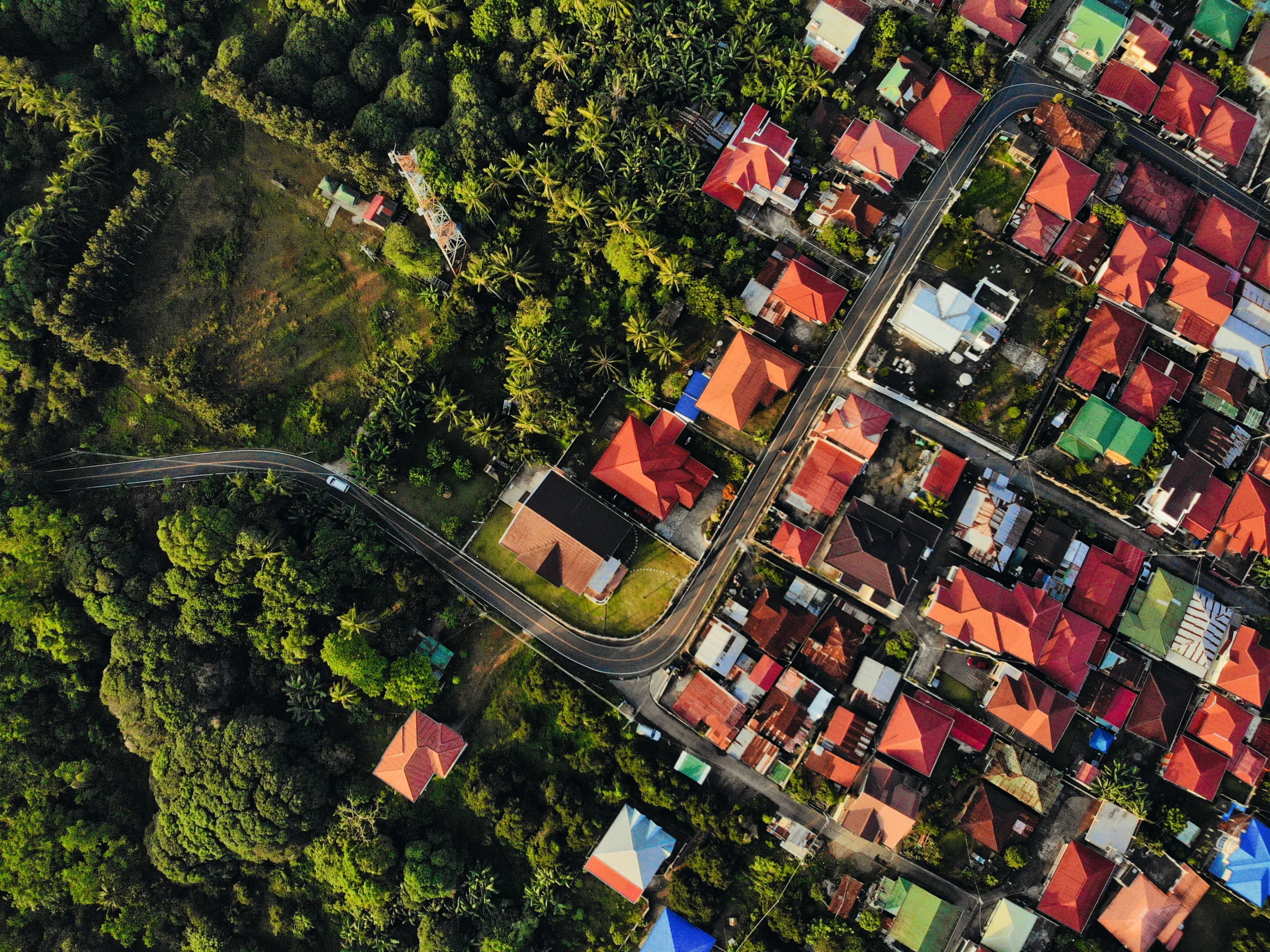
In Uganda’s rapidly urbanizing market, the changes happening around your property are often more powerful than any renovation you could do to it. Here’s how to read them and what to do about it.
Consider two houses. Both are three-bedroom, both have iron sheet roofing, both were built around the same time by landlords with similar budgets. One sits on a quiet plot in Namuwongo. The other is on a tarmac road in Naalya. Today, the Naalya property commands nearly double the monthly rent — not because it is a better-built house, but because of everything that has happened around it.
This is the defining truth of property investment in Uganda: your neighborhood is doing more for your property’s value than you are. The roads laid down around you, the schools that opened a kilometer away, the supermarket that moved in last year, these forces shape what tenants are willing to pay, how quickly vacancies fill, and ultimately what your asset is worth when it comes time to sell.
In more mature property markets investors have access to deep historical data, price indices by postcode, and professional valuers who track these shifts closely. In Uganda, that infrastructure is still developing. Which means the landlord who learns to read neighborhood signals directly has a significant edge over one who simply holds and hopes.
This piece is about giving you that edge. We will walk through why neighborhood development carries extra weight in Uganda’s market specifically, identify the six development signals that reliably move property values, show you how to spot a rising neighborhood before the prices reflect it, and draw lessons from real corridors across Kampala that have shifted for better and for worse in the last decade.
Why Uganda’s market makes neighborhood signals matter more than usual
Uganda is urbanizing at speed. The World Bank estimates that over 27% of Ugandans now live in urban areas, a figure that was under 15% just two decades ago. Kampala, the economic and administrative heart of the country, continues to absorb enormous volumes of internal migration, with its greater metropolitan area expanding rapidly into districts like Wakiso, Mukono, and Kira.
This rapid expansion creates a property market that is, in technical terms, still price-discovering. Unlike developed cities where years of transaction data exist for any given street, Kampala’s formal property records are patchy, valuations are often informal, and rental prices in many suburbs are set by negotiation and word of mouth rather than published indices.
What this means practically is that there is no reliable data telling you what your property should be worth but there are observable signals happening around you that a trained eye can read and act on. Those signals are neighborhood development events.
There is also something specific about Uganda’s dual property market. On one hand, there are the formal estates with gated developments along Entebbe Road, Muyenga, Naguru, and Kololo where professional-class tenants pay premium rents and expect defined amenities. On the other, there is the vast and economically significant mizigo economy with high-density rental housing that houses the majority of Kampala’s urban population and generates substantial income for tens of thousands of individual landlords.
Development affects these two markets differently. A new international school lifts formal estate values through increased demand from professional families. A tarmac road through a high-density suburb lifts mizigo rental rates by expanding the catchment of tenants willing to commute from there. Understanding which type of development affects your type of property is as important as spotting the development itself.
In a market where formal data is thin, neighborhood literacy is the investor’s most reliable compass. The landlord who knows their corridor outperforms the one who simply owns in it
The six development signals that move property values in Uganda
Not all development is created equal. Some projects have an immediate and dramatic effect on surrounding property values. Others take years to flow through. And some as we will see in the case examples can actually suppress value rather than lift it. Here are the six categories that matter most in the Ugandan context.
Road & transport infrastructure
Tarmac roads are the single most reliable value multiplier in Uganda. The Entebbe Expressway, the Kampala Northern Bypass, and the ongoing paving of arterial routes into areas Kira and Namugongo have each created measurable uplift in surrounding land prices and in some cases land values doubled within 18 months of completion.
Commercial anchors
When a supermarket, bank branch, hospital, or large employer establishes itself in an area, it signals to the market that middle-class demand has reached critical mass. Naalya’s transformation from a quiet suburb into one of Kampala’s most sought-after family zones was anchored largely by commercial development along its main corridor.
School clusters
Proximity to reputable schools — international, national, or faith-based is one of the most reliable drivers of sustained family-tenant demand. Parents with school-age children will pay a premium to reduce the school run, and they tend to be stable, long-term tenants. Areas within easy reach of established schools almost always command a premium over comparable areas that are not.
Government & KCCA interventions
Drainage works, walkway construction, street lighting installations, and solid waste management improvements by KCCA are often early signals of area prioritization. They are not just amenity improvements, they indicate that government attention and future investment is likely to follow. Where KCCA invests, formal development typically follows within a planning cycle.
New property development density
When developers begin acquiring land and constructing in your area, the correct question is not simply “is this good?” but “what type of demand is it targeting?” Formal apartment blocks targeting professionals lift the status and rental ceiling of a corridor. But poorly planned high-density development without supporting infrastructure can trigger overcrowding, strain utilities, and paradoxically suppress value.
Security perception
This is the signal that most landlords underestimate. In Kampala’s professional-tenant market, perceived security presence, estate gating, functional street lighting, a reputation for low crime directly affects willingness to pay. Two comparable properties in adjacent areas can have dramatically different rental yields purely on the basis of how safe the area is perceived to be by the target tenant class.
Case examples: neighborhoods that moved and what drove them
Theory is useful. But let us look at what has actually happened in specific Kampala-area corridors over the past decade, because the patterns here are instructive for anyone thinking about where to invest or how to manage property they already own.
Naalya
Naalya’s transformation into one of Kampala’s most in-demand family suburbs happened in under ten years, and it followed a recognizable pattern. A supermarket established itself on the main road, signaling viable retail demand. Reputable schools followed. Developers built formal estate housing. Banks opened branches. Each anchor attracted the next. Today, Naalya commands rents among the highest in Kampala’s suburban market, and vacancy rates for well-managed properties there are low. What is instructive is how early the signals were visible, the supermarket and the school came years before the rental premium fully materialized. Landlords who read those signals early and either acquired or improved their properties in that window captured enormous value.
Nalukolongo / Ndeeba industrial zone
Not all development is a gift to surrounding property. The expansion of industrial activity along the Nalukolongo corridor demonstrates how one type of development can actively damage residential property value. Increased heavy vehicle traffic, industrial noise, air quality concerns, and a shift in area character away from residential use have made it harder for landlords in directly adjacent areas to attract and retain professional-class tenants willing to pay premium rents. The development was real and significant, but its effect on residential rental property was negative. The lesson: always ask what kind of development is coming, not just whether development is coming. An industrial neighbor and a commercial anchor are not equivalent events.
Reading the signs early: how to spot a rising neighborhood before prices move
The most valuable skill for a Ugandan property investor is not finding the neighborhood that has already risen, it is identifying the one that is about to. Here is how to do that systematically.
Early signals to watch
- The Kampala “coffee shop test”
When a supermarket, pharmacy, and fuel station all appear within the same 500-meter stretch, middle-class residential migration has almost certainly already begun. These businesses do not speculate, they open where demand already exists. By the time they open, the window for early land acquisition may already be closing.
2. NWSC and UEDCL extension maps
Utility extension into a new area typically precedes formal residential development by twelve to twenty-four months. Both NWSC (water) and UEDCL (electricity) publish expansion plans — they are publicly available and rarely read by individual landlords. When utilities extend into a new corridor, take it seriously as a signal of incoming residential demand.
3. KCCA zoning changes and the Kampala Physical Development Plan
The Kampala Physical Development Plan sets out how different zones of the city are designated for residential, commercial, mixed-use, or industrial development. Amendments to this plan — often gazetted quietly — can have significant implications for adjacent property values. This document deserves regular attention from anyone with a serious property portfolio in greater Kampala.
4. Diaspora investment patterns
In Uganda, diaspora remittance-funded construction is a significant driver of neighborhood upgrading. When an area begins attracting construction financed by Ugandans living abroad, it typically signals that the diaspora community — who research carefully and invest conservatively — has confidence in the area’s trajectory. This is not infallible, but it is a useful corroborating signal.
5. Church and institutional expansion
In the Ugandan context, large religious institutions, universities, and vocational colleges function as residential demand anchors in ways that are sometimes underestimated. The growth of the Namugongo corridor was partly shaped by its religious significance. A major university campus or church headquarters creates sustained, predictable rental demand from students, staff, and visitors — often with lower churn than the general tenant market.
What landlords and investors should actually do with this
Understanding neighborhood development is only useful if it changes behavior. Here is how to translate the signals into practical property decisions.
For landlords with existing properties: the most important application is timing. Renovations and rent reviews should be timed to neighborhood cycles, not to arbitrary schedules. If a major road project is underway two kilometers from your property and is expected to complete in eighteen months, that is probably not the right moment to renovate and raise rent because the demand that will justify that increase has not yet materialized. Wait for the completion, watch for the first wave of new tenants moving into the area, and then position your upgraded property into that rising demand. The sequence matters enormously.
For investors looking to acquire: the highest-value acquisition window is almost always between announcement and construction of major infrastructure. Once a road project breaks ground, land prices in the adjacent area begin to move. Once it completes, they have typically already moved significantly. The investor who reads the government gazette and KCCA planning notices and acts on them before the market catches up captures the most value.
On the risk side: not all the signals discussed in this piece carry equal certainty. Government infrastructure projects in Uganda, as in many rapidly developing countries, can face delays, funding shortfalls, or route changes. An investor who over-concentrates a portfolio around a single unfinished road project is taking on concentrated risk. Additionally, Kampala’s flood corridor — the low-lying areas around the Nakamiro Channel, parts of Bwaise, and other drainage-challenged zones — carries an infrastructure risk that development cannot simply overcome. Beautiful neighborhood development does not eliminate flooding. Know the land, not just the corridor.
Finally, and most practically: keeping pace with all of this is a full-time analytical task. Tracking KCCA plans, reading utility expansion announcements, monitoring what is being built within a two-kilometer radius of your properties, understanding what the new tenants coming into your area are willing to pay, this is not work that gets done at the same time as a day job. It is the core of what professional property management should provide.
Your property does not exist in isolation. It exists within a neighborhood that is continuously changing and those changes are the most powerful force acting on your asset’s value. The landlord who understands this treats their neighborhood as part of their investment, not just the backdrop to it.
Uganda’s urbanization is still in an early and dynamic phase. Neighborhoods that are unremarkable today will be in high demand in five years. Areas that seem established will face pressures they have not encountered before. The window for informed, early positioning is open but it does not stay open indefinitely.
Structured property management means doing this work continuously: tracking the signals, timing the decisions, and positioning your asset to capture the value that neighborhood development creates. That is what better returns look like in practice.